

Odds represent the mathematical core of all casino games, yet numerous players never stop to grasp what they truly show. At Need for Slots bono de recarga, the whole experience is designed to provide players with clear data before they make a bet. Understanding how odds function does not ensure a victory, but it converts betting from haphazard speculation into knowledgeable fun. This guide explains the core ideas behind odds, how they pertain to slots, table games, and live casino gaming, and what to examine before gambling with real funds.
How Odds Really Work in Casino Games
Odds indicate the probability of a particular outcome occurring, typically shown as a fraction, percentage, or divided value. In a straightforward coin toss, the odds of heads are 1 in 2, or 50 percentage. Casino games incorporate a house edge, which is the numerical advantage the operator holds over time. That edge does not mean a player is unable to win in the short term. It indicates that across many rounds, the casino projects to hold onto a minor percentage of all money wagered.
At Need for Slots, all game category carries its own odds structure. Slot machines employ random number generators to establish each spin on its own, while blackjack odds shift based on the cards already dealt. Roulette odds are fixed by the wheel layout. Comprehending these distinctions assists players pick games that match their risk tolerance. A player who desires common small wins will seek various odds than someone going after a big progressive jackpot.
The key difference is between true odds and payout odds. True odds show the real probability of an event. Payout odds are what the casino offers when that event occurs. The difference between the two is where the house edge resides. For illustration, a single number in European roulette has true odds of 36 to 1 against winning, but the standard payout is only 35 to 1. That one-unit variation creates the casino’s advantage on that bet.
Live Casino Odds and Real-Time Play

Live casino games provide the identical odds as their physical counterparts, but with the extra clarity of seeing a real dealer manage real cards or turn a real wheel. The mathematical odds do not change because the game is transmitted. A live European roulette wheel still has a 2.7 percent house edge, and live blackjack adheres to the standard card distribution as a physical table.
The edge of live play is verification. Players can observe every reshuffle, every rotation, and every card drawn in real time. This erases doubts about random number generator fairness, even though authorized online casinos use independently tested RNGs. For players who trust visual confirmation over software certification, live casino games offer a convincing middle ground between online convenience and physical casino atmosphere.
At Need for Slots, live dealer tables include blackjack, roulette, baccarat, and game show style formats. Each game carries its own odds profile. Game show titles often include higher house edges due to their entertainment-focused mechanics and bonus multipliers. Players should view these as entertainment products first, with the understanding that the mathematical return may be less advantageous than traditional table games.
Slot Odds and Player Return Percentages
Slot machines do not display odds in the same way as table games. Instead, they publish a return to player percentage, usually abbreviated as RTP. This figure represents the theoretical amount a slot gives back to players over millions of spins. A slot with a 96 percent RTP should pay back 96 euros for every 100 euros wagered eventually. The remaining 4 percent represents the house edge.
RTP serves as a long-term statistical average, not a guarantee for any single session. A player might spin 50 times and hit a bonus round that pays 200 times the stake, or spin 500 times with no a significant win. Volatility, also called variance, determines how those returns are distributed. Low-volatility slots pay smaller amounts frequently. High-volatility slots provide larger wins but with longer dry spells in between them.
Need for Slots showcases a wide range of slot titles with various RTP and volatility profiles. Players can usually find the RTP in the game’s information or help section before loading the reels. Checking this figure requires less than a minute and provides a clearer picture of what to expect. A slot with a 94 percent RTP and high volatility functions very differently from one with a 97 percent RTP and low volatility, even if both look visually similar.
Progressive Jackpot Odds
Progressive jackpot slots work under a different mathematical model. A small portion of every wager goes into a growing prize pool, which may reach millions of euros. The odds of hitting the top progressive prize are regarded as extremely low, similar to winning a national lottery. However, the base game still provides regular wins through its standard RTP. The jackpot contribution marginally decreases the base game return.
Players drawn to progressive slots should know that the massive headline prize is a rare event. The practical strategy centers on treating the base game as the main entertainment and viewing the jackpot as a bonus possibility. Betting more per spin does not enhance the odds of triggering the jackpot proportionally, though some progressives need a minimum stake to qualify. Always check the game rules before starting.
What to Check Before You Place a Bet
Any player should develop a fast pre-bet routine to ensure they comprehend the odds they face. The initial step is identifying the game’s RTP or house edge. For slots, check the information section. For table games, check the specific rules. A blackjack table with 3 to 2 payouts and a single-zero roulette wheel are superior options than their worse variants.
The next step is examining any current bonus terms. Wagering requirements, game contributions, and time limits all impact the real value of a bonus. A bonus that looks generous on the surface might be tough to complete if the player prefers table games. The final step is verifying payment method limits and processing times, especially for withdrawals. Being aware of how rapidly winnings can be accessed prevents disappointment later.
- Check the RTP or house edge for the exact game and variant.
- Review bonus terms, including wagering multiple and game weighting.
- Confirm withdrawal processing times and any weekly or monthly caps.
- Confirm that the casino has a valid licence and uses tested software.
- Set a session budget before playing and follow it regardless of results.
Players who adhere to these steps reach better-informed decisions. Odds are not a secret code kept for mathematicians. They are the most obvious signal available about what a game delivers and what it costs to play. Need for Slots delivers the information players require to assess each game and bonus on its own merits, so every wager is placed with open eyes and realistic expectations.
Licensing Security, and Fair Play Verification
A casino’s permit is the basis of confidence in its odds. Licensed operators must provide their games for independent testing to confirm that RTP figures are correct and that random number generators create genuinely random outputs. Need for Slots works under a acknowledged gambling license, which sets strict demands for game integrity, player fund safeguarding, and responsible gambling options.
External testing agencies audit casino games periodically. These reviews verify that the theoretical RTP matches the actual behaviour of the software over millions of simulated plays. They also verify that the random number generators cannot be predicted or altered. For players, this signifies the odds presented in a game’s information panel are not marketing statements but verified mathematical attributes of the software.
Security protocols protect the financial transactions and personal data that accompany every stake. Encryption technology guarantees that payment information and account details cannot be accessed. Responsible gambling tools, such as deposit caps, session reminders, and self-exclusion choices, aid players maintain discipline. These functions do not alter the odds of any game, but they build an environment where odds can be assessed impartially and without external manipulation.
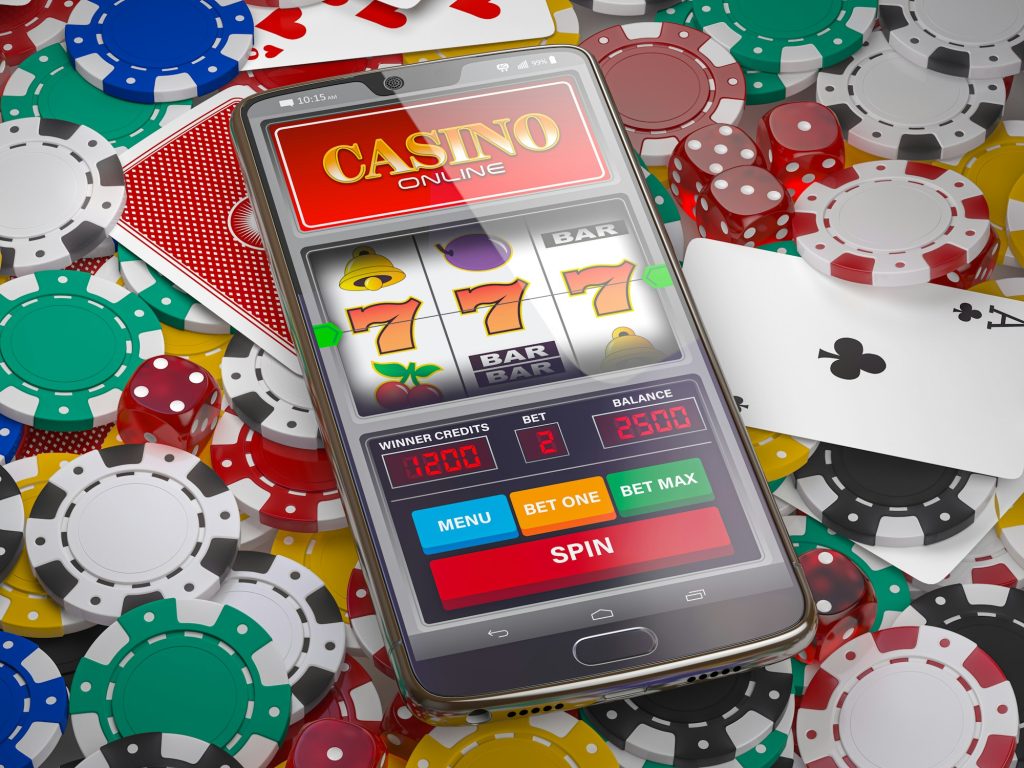
Playing on Mobile and How Your Device Affects Nothing About The Odds
Users sometimes ask whether mobile casino games have varying odds than desktop versions. The answer is no. The random number generator and game logic are uniform across all devices. A slot with a 96 percent RTP on a desktop computer has the same 96 percent RTP on a smartphone or tablet. The only variations are screen size, touch controls, and layout adaptation.
Need for Slots optimises its full game library for mobile browsers and dedicated apps where available. The experience is designed to be smooth, with quick loading times and intuitive navigation. Users can access the identical bonuses, payment methods, and game selection from any device. This consistency means a player can check a game’s RTP on a phone, play a few rounds on a tablet, and continue on a desktop without any change in the underlying odds.
The practical advantage of mobile play is accessibility, not improved or worsened odds. A player who can access games during short breaks may play more frequently, which increases total wagering volume and, over time, brings actual results closer to the theoretical RTP. More play does not alter the odds per spin or hand, but it does mean the long-term statistical averages become more applicable to the individual player’s experience.
The way Bonuses Influence the Odds You Face
Casino bonuses modify the effective odds of play because they impose wagering requirements and game weighting rules. A welcome bonus might provide 100 percent extra on a deposit, but the bonus funds cannot be withdrawn until the player wagers a multiple of the bonus amount. If a bonus requires 35 times wagering on a 100 euro bonus, the player must make 3,500 euros in bets before withdrawing any bonus-related winnings.
Game weighting dictates how much each wager contributes toward clearing those requirements. Slots typically contribute 100 percent, meaning every euro wagered counts fully. Table games often contribute much less, sometimes 10 percent or even zero. A player who claims a bonus and plays only blackjack may find it difficult to clear the wagering requirement, while a slot player clears it much faster. This weighting directly affects the practical value of a bonus.
Need for Slots displays bonus terms clearly, including wagering requirements, game contributions, and time limits. Players should review these before opting in. A bonus with a 25 times wagering requirement on slots is more achievable than one with 50 times. The headline bonus amount matters less than the combination of wagering multiple, game weighting, and maximum bet allowed during bonus play. These factors together determine whether a bonus is genuinely valuable.
Standard Bonus Structures to Expect
Online casinos commonly feature three bonus types: deposit match bonuses, free spins, and cashback offers. Deposit matches provide a percentage of the deposit as bonus funds. Free spins are tied to specific slot titles and carry their own wagering requirements on any winnings. Cashback returns a percentage of net losses over a set period, usually as bonus funds with lower or no wagering requirements.
Each bonus type functions with odds differently. Free spins on a high-RTP slot give a better expected return than free spins on a low-RTP title. Cashback effectively reduces the house edge for the qualifying period, since a portion of losses returns to the player. Deposit matches amplify bankroll but introduce wagering obligations that must be cleared before withdrawal. Understanding these mechanics helps players choose bonuses that align with how they actually want to play.
Table Games Odds and House-Edge Comparisons
Table games usually deliver better odds than slots because the house edge is lower and more transparent. Blackjack, when using with basic strategy, may have a house edge under 1 percent in favorable rule sets. Baccarat has a house edge of around 1.06 percent on banker bets and 1.24 percent on player bets. European roulette sits at 2.7 percent, whereas American roulette doubles that to 5.26 percent due to the extra double-zero pocket.
These differences count significantly over time. A player betting 100 euros per hand for 100 hands risks 10,000 euros in total action. With a 0.5 percent house edge, the expected loss is 50 euros. With a 5.26 percent edge, the expected loss rises to 526 euros. The selection of game and certain bet creates a direct impact on the length a bankroll survives and how much entertainment value a player gets per euro wagered.
Need for Slots features multiple table game variants, each with marginally different rules that impact odds. A blackjack table that offers 3 to 2 for a natural blackjack is far better for players than one offering 6 to 5. A roulette wheel with a single zero is superior to one with both zero and double zero. Checking the table rules before joining is one of the easiest ways to enhance expected returns.
Payment Methods, Settlement Periods, and Usable Boundaries
Chances are only a component of the casino experience. The pace es.wikipedia.org and trustworthiness of deposits and withdrawals also influence how players perceive value. Need for Slots provides a range of payment methods popular in Spain, including debit cards, bank transfers, and popular e-wallets. Each method has varying processing times for withdrawals, with e-wallets typically fastest and bank transfers slowest.
Deposits are normally instant or near-instant across all supported methods. Withdrawals demand verification and processing time. E-wallet withdrawals might complete within 24 hours after approval, while card withdrawals can take three to five business days. Bank transfers may take even longer. Players should consult the cashier section for the exact limits and timeframes that pertain to their chosen method before initiating a payout.
Withdrawal limits also matter. Some casinos limit the amount a player can withdraw per week or per month. These limits do not affect odds directly, but they shape how easily a player can obtain winnings. A large jackpot win is less fulfilling if it takes months to withdraw due to low caps. Verifying these limits in advance avoids frustration later and assists players pick a casino that aligns with their expectations for payout flexibility.
Frequently Asked Questions Regarding Odds
Can a higher RTP mean I will win more?
No. RTP is a statistical average determined over millions of spins or hands. In any single session, variance is key. A high-RTP slot can still produce a losing session, and a lower-RTP slot can provide a large win. RTP is useful for contrasting games over the long term, but it cannot foretell short-term results.
Does I improve my odds by modifying my bet size?
In most games, bet size does not affect the underlying odds or house edge. Betting more raises the amount wagered and therefore the expected loss in absolute terms, but the percentage house edge is the same. Some progressive jackpots need a minimum bet to qualify for the top prize, so always review the specific game rules.
Do live casino odds dissimilar from regular online table games?
The mathematical odds are the same when the game rules are the same. A live European roulette wheel has the same 2.7 percent house edge as a software-based European roulette game. Differences arise only when rule variations exist, such as payout ratios in blackjack or the number of zero pockets on a roulette wheel.
Will bonuses impact the house edge?
Bonuses do not affect the house edge of a game, but they change the effective value of play by adding wagering requirements. A bonus with low wagering requirements and full slot contribution can lower the effective cost of play. A bonus with high requirements and low game contribution may not be worth claiming, depending on the player’s preferred games.
What is the best game to play for the lowest house edge?
Blackjack commonly offers the lowest house edge when played with basic strategy and favourable rules, often below 1 percent. Baccarat banker bets are also low at around 1.06 percent. European roulette is at 2.7 percent. Among slots, the highest-RTP titles get close to 97 to 98 percent, but volatility still determines the short-term experience.